
As more and more wide- and ultra wide-angle lenses join the Canon EOS system, the possibilities for dramatic video and still images grow for many users. But simply attaching a wide-angle lens sometimes doesn’t always immediately generate that visual excitement, especially for those new to working with these lenses. We’ll show you a few easy ways to raise your game with wide and especially ultra wide lenses, and we’re confident the result will be stronger imagery.
An Important Side-Bar: Lenses for APS-C Sensor Cameras
Hopefully, this will simplify what for some readers may be a point of confusion. Interchangeable lens digital cameras typically are available with different physical sizes for their image sensors. Canon EOS mirrorless cameras either use a full-frame sensor, which is the same size as a traditional 35mm film slide or negative at 24x36mm in size. Or, they can use the smaller, less-expensive “APS-C” size sensor. In Canon’s case, this sensor is roughly 22.5x15mm in width x height.
With these smaller imaging sensors, APS-C sensor cameras will make any attached lens act more like a telephoto lens, in terms of its field of view. Especially with wide-angle lenses, this immediately makes a given wide lens significantly less wide. Accordingly, for true wide-angle video and still images, APS-C type cameras need lenses with even shorter marked focal lengths.


Here’s a perfect example of how one lens would deliver different coverage on full-frame vs. APS-C cameras. The first image, from full-frame at an ultra wide 18mm zoom setting, gives very broad wide-angle coverage. The “crop factor” (1.6x the marked focal length) means on an APS-C sensor camera, the same lens delivers far less wide coverage.
Photographers and videographers often refer to the actual, marked focal length of a lens when discussing its coverage — as we do in this article. And, they typically use full-frame sensors and lenses as the reference point. But for clarity, we’ll mention what lens(es) would provide equivalent coverage and viewing characteristics, if you’re using an APS-C sensor camera, such as an EOS R50 or R7 model.
What is Wide-Angle?
Traditionally with interchangeable lens cameras (assuming 35mm film, or a full-frame digital camera), a wide-angle lens was considered a lens with a focal length of about 35mm, or lower — the lower that focal length, in millimeters, the wider the lens’s coverage is.
Lenses of roughly 28mm or 35mm have long been considered the starting point for wide-angle coverage, getting more into the frame than the traditional 50mm (or so) “standard” lens. These lenses deliver moderate wide-angle coverage.
An example of the moderate wide-angle look of a 35mm lens, on a full-frame camera. This is the starting point for wide-angle imagery — as we’ve explained, if you use a camera with a smaller APS-C size image sensor, you’d see equivalent coverage with about a 22mm lens.
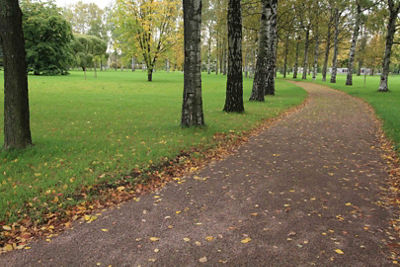
Increasingly, we’re seeing more and more zoom and fixed focal length lenses with significantly wider potential coverage. Lenses about 20mm or lower (again, on full-frame cameras — this equates to lenses of about 12mm or lower on an APS-C camera) are generally considered ultra wide-angle.
Ultra wide-angle lenses can take even ordinary subjects and bring a new look to them. Here, a wide-angle zoom lens was used at 16mm, with a full-frame camera, to turn a subway escalator into an exciting image. On an APS-C sensor camera, the same effect would be produced by about a 10mm wide-angle lens.
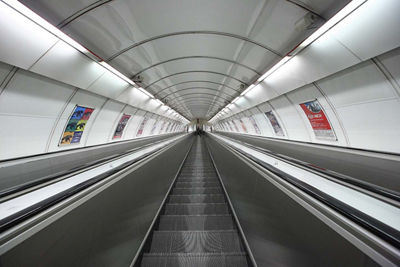
Keep in mind that many of today’s standard zoom lenses often begin their zoom ranges at 24 or 28mm (equivalent to about 15~18mm on APS-C cameras), so many mirrorless and DSLR users have some degree of wide-angle potential on their cameras right now.
The Biggest Problem with Wide-Angle Images
Shown here is the biggest stumbling block many users face with wide-angle stills and video. You see an interesting scene, and use your wide-angle lens to “get it all in.” The problem — everything just looks far away.
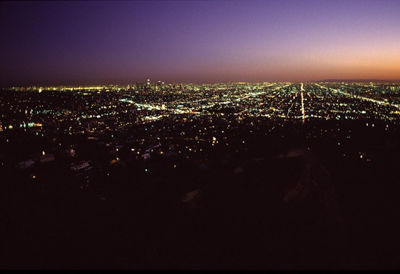
The image above sums up the biggest problem many users need to overcome. There’s more to great wide-angle images than simply finding a dramatic scenic vista and pointing your camera at it. The key is understanding what wide-angle lenses do, in general — beyond just “get more into the picture”:
- Wide-angle lenses will push away middle and distant subjects, making them look farther away
- Wide-angle lenses will enhance subjects near the lens, and give them more emphasis by making them look proportionally larger in the frame
The Wide-Angle Answer: Get Close to Something
Simply stated, that’s the key to great wide-angle imagery — find something you can get close to, focus upon it, and let it guide the viewer into the frame. Each of the following images does exactly that, transforming what might be an ordinary, everyday subject into something visually different.
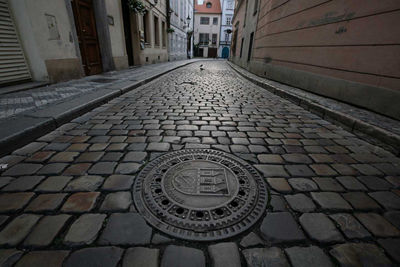

Each of these ultra wide-angle images puts something of emphasis in the foreground, but their broad view incorporates lots of the environment as well.
Obviously, not every scene lends itself perfectly to this. But creative videographers and photographers often take the time to see the potential in a scene, and look around to find ways to let a wide-angle lens bring foreground and background into harmony. In some cases, all it takes is moving a few steps closer to some foreground object, and/or kneeling down to get your lens closer to it.
Another Vital Wide-Angle Point — Watch What’s in Your Backgrounds
Wide-angle lenses really emphasize what’s in your backgrounds by including a lot more in a scene. It can make a big difference in your wide-angle video and still-images to check around the edges of your frame, and be sure you aren’t including extraneous things like street signs, passers-by, or even some litter on a sidewalk. Sometimes, just stepping in a little closer, or zooming the lens slightly, can greatly simplify and enhance your backgrounds — even when you have something dramatic in your foreground.
Wide-angle lenses bring a lot more into the scene, making it vital to check the sides of the frame and backgrounds for unwanted distractions. In this case, a sign for a subway stop on the far left side, with a blurred train entering the station, adds useful information to the picture. But what if we had part of an advertising poster instead, sticking into the left of the frame? Check the edges of your frame, and be sure you WANT any visible items to actually be included.

More Wide-Angle Considerations
We’ve hopefully shown that wide- and ultra wide-angle lenses can do more than just take selfies, or broad landscape images. Sometimes by just moving your position a little bit closer to something in the foreground, you can create that visual bridge between the background and what’s close to the camera.
It goes without saying that in today’s world, wide-angle is a hallmark of modern video content, from casual vlogging videos to sophisticated productions promoting travel, products, and more. For some users, it may be video considerations that guide them into adding one or more ultra wide-angle lenses to their arsenal.
Ultra wide-angle has come to be synonymous with vlogging and video content. For selfie-oriented video, most users find a lens at least 24mm (APS-C equivalent 15mm) or wider is needed, to encompass a speaker’s upper-body with the camera arm’s length away.

Of course, wide-angle lenses can be great for things like environmental portraits, interiors, and creating visual excitement in anything from a flower to a car. A key point, which we’ve mentioned already: an ultra wide lens simply changes whatever you aim it at, and has the potential to deliver images that simply look different than what we see and perceive with our naked eyes.

Wide-angle lenses often aren’t considered portrait lenses, but they can be a great way to bring the environment into a head-and-shoulders shot. Here, a 10mm lens on an APS-C sensor camera (equivalent to 16mm with a full-frame camera) included background information that adds to the image. And, moving in close, the flower nearest the camera gains even more visual prominence in the scene.
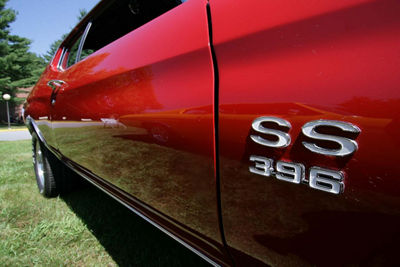
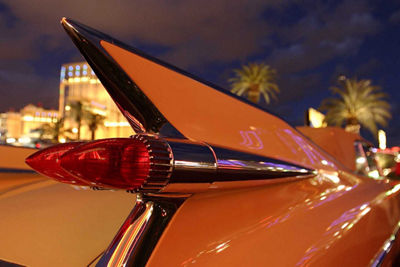
Again, a 10mm lens on an APS-C digital camera (16mm full-frame equivalent) totally transforms this look at a classic car. Simply zooming wide and getting in close turns an ordinary image into a dramatic one!
Canon Wide-Angle Lens Possibilities — That Don’t Break the Bank
If you’re currently working with a standard zoom, such as an 18-45 or 18-55mm for an EOS Rebel or APS-C type mirrorless camera, or alternatively with something like a 24-70mm or 24-105mm lens for full-frame, there are many choices to bring ultra wide angle into your visual options. The growing Canon RF and RF-S lens lines have added some compelling and relatively affordable options here, compared to high-end professional lenses, meaning that ultra wide-angle is no longer exclusively for pros or the super-serious enthusiast. We’ll conclude with a few examples for Canon EOS users to consider:
- Canon RF-S10-18mm F4.5–6.3 IS STM
For APS-C sensor cameras, such as EOS R100, R50, R10, and R7 — visually equivalent to a 16–29mm lens on a full-frame camera. With these cameras, this is the way to bring ultra wide-angle into your arsenal. - Canon EF-S10-18mm f/4.5-5.6 IS STM
The first ultra-wide option for Canon EOS digital SLRs with APS-C size sensors, such as the popular EOS Rebel series, EOS 20D~90D cameras, and so on. - Canon RF16mm F2.8 STM
Super-compact and lightweight lens, and an outstanding entry into ultra wide coverage on full-frame mirrorless cameras. To be clear, this is not a fisheye-type lens; it keeps straight lines straight. - Canon RF15–30mm F4.5–6.3 IS STM
Flexible and lightweight ultra wide to wide-angle zoom — an excellent travel or vlogging lens, again for EOS R-series full-frame mirrorless cameras
There are obviously many more lens choices in today’s Canon’s lens line for mirrorless cameras and for previous Digital SLRs, but these are a sampling of some that are probably cost-efficient for some users, and offer tremendous visual potential. We hope this look at getting more from wide-angle lenses has been helpful!

Thanks for signing up!
The application has encountered an unknown error. Please try again in a few minutes!
By clicking Sign Up, you are opting to receive promotional, educational, e-commerce and product registration emails from Canon USA. You can update your preferences or unsubscribe at anytime.