
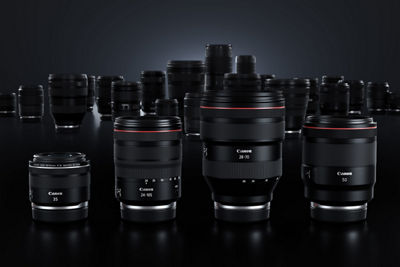
With today’s productions we are often being asked to create higher quality content with tighter budgets and smaller crews. This is true in almost all types of production environments, so the choices we make regarding what cameras & lenses we use (and the features they provide), are becoming even more important. Having camera equipment that can fit into the “Swiss Army Knife” category is critical to allowing us to tackle the many kinds of content we are being asked to create.
Canon provides a number of cameras in both the mirrorless category (Canon EOS R series), and the Digital Cinema Category (Canon EOS C series), that allow content creators, video production professionals, filmmakers and corporate, live event & in-house productions to both tell their stories and create content to sell products & services. That said, the camera you choose is only one part of a camera system. Lenses, and in Canon’s case RF-mount lenses, are the other critical part of your EOS R or EOS C system.
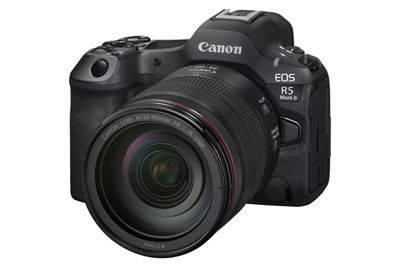
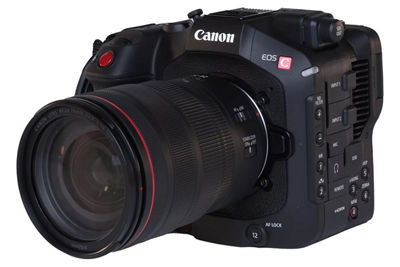
At the time of this article being published, there are over forty native full frame RF-mount based lens solutions offered by Canon (with many being ideal for not only stills, but also motion capture applications). In fact, many RF lenses, along with EOS R- or EOS C-series camera bodies, have been designed by Canon to excel in capturing moving images making them ideal for video production.
Lenses like the RF24-105mm F2.8 L IS USM Z (the world’s first AF lens with this focal length range with a consistent f/2.8 max aperture), and the RF70-200mm F2.8 L IS USM Z were largely designed for video production applications. With features like a smooth, click-less iris ring for precise aperture control, close focusing capabilities and support for Canon’s optional Power Zoom Adapters, they are ideal for a variety of productions.
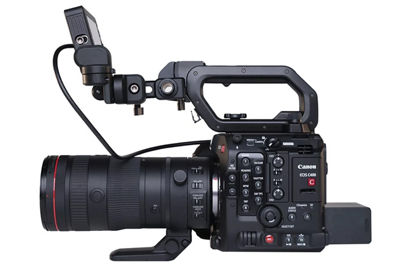
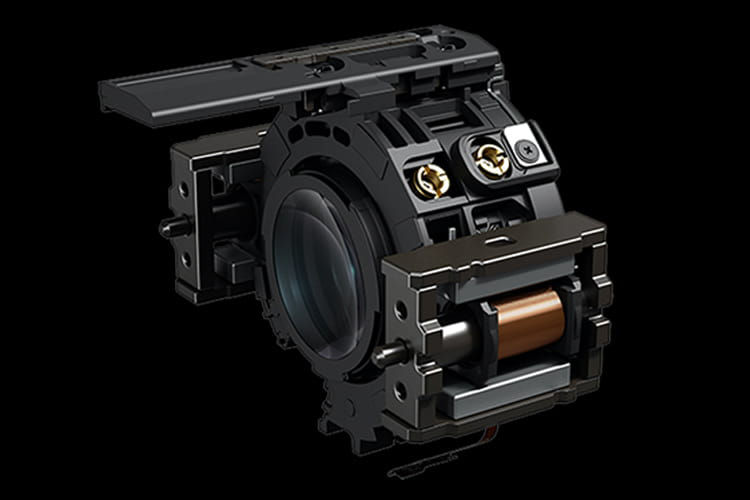
The Voice Coil Motor (VCM) series of RF-Mount lenses are true hybrids. The RF14mm, RF20mm, RF24mm, RF35mm, RF50mm and RF85mm L VCM lenses all share a fast f/1.4 aperture, a click-less aperture ring and the Voice Coil Motor which is a powerful linear AF drive motor. The VCM results in a super responsive and virtually silent autofocus which is also extremely smooth, which is critical for video based capture. All of the VCM lenses also have excellent lens breathing characteristics (meaning little to no change in your composed frame when changing focus), which means they are, again, ideal for capturing moving images when pulling focus.
While all of the above mentioned L series RF lenses could be considered hybrid lenses that are excellent choices for both stills and motion capture, it is apparent by their features and design that they are ideal choices for video production applications.
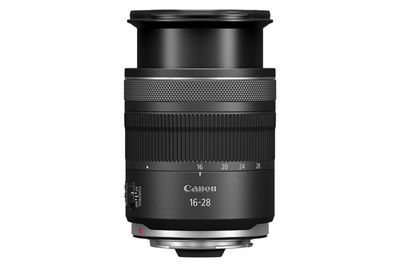
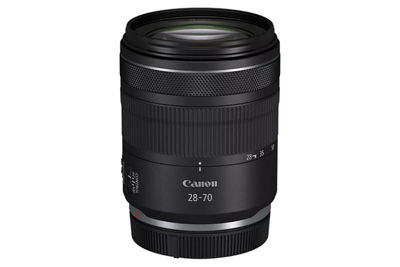
Add to the above the other Canon RF lenses available (both primes and zooms), and you have lenses for virtually any type of video production. This includes the Canon RF 16-28mm and 28-70mm F2.8 IS STM compact and fast zooms, and a number of lenses with excellent close-focusing, such as the RF24mm F1.8 Macro IS STM, RF35mm F1.8 Macro IS STM, and the RF85mm F2 Macro IS STM — all of which can focus down to ½ life-size. And the RF100mm F2.8 L Macro IS USM is a true macro lens, focusing from infinity down to 1.4x magnifications. With the Canon RF lens line, you have lenses for virtually any type of production.
Following are some additional features and benefits of RF-Mount lenses…
Large Diameter & Short Back Focus — The Heart of Mirrorless Optics
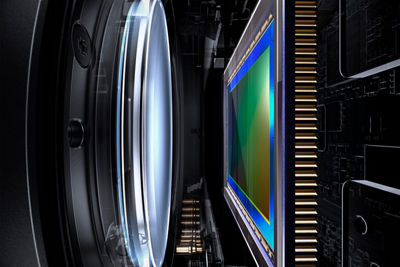
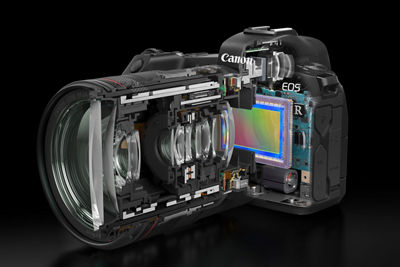
RF lenses are designed to complement Canon’s RF-Mount based mirrorless & digital cinema cameras. One of the defining characteristics of RF lenses is their large mount diameter. This allows for a wider light path, leading to improved image quality, reduced vignetting, and better edge-to-edge sharpness.
Another notable feature of RF lenses is their short back focus distance. This refers to the distance between the rear lens element and the camera’s imaging sensor. A shorter back focus allows for more compact lens designs without compromising optical performance. The combination of these two factors — short back focus distance, and wide rear optical section — helps reduce optical aberrations, resulting in clearer, sharper images. This is at the heart of why mirrorless lenses, especially at normal and wide-angle focal lengths, perform so well optically.
Customizable Control Rings & Lens Function Buttons

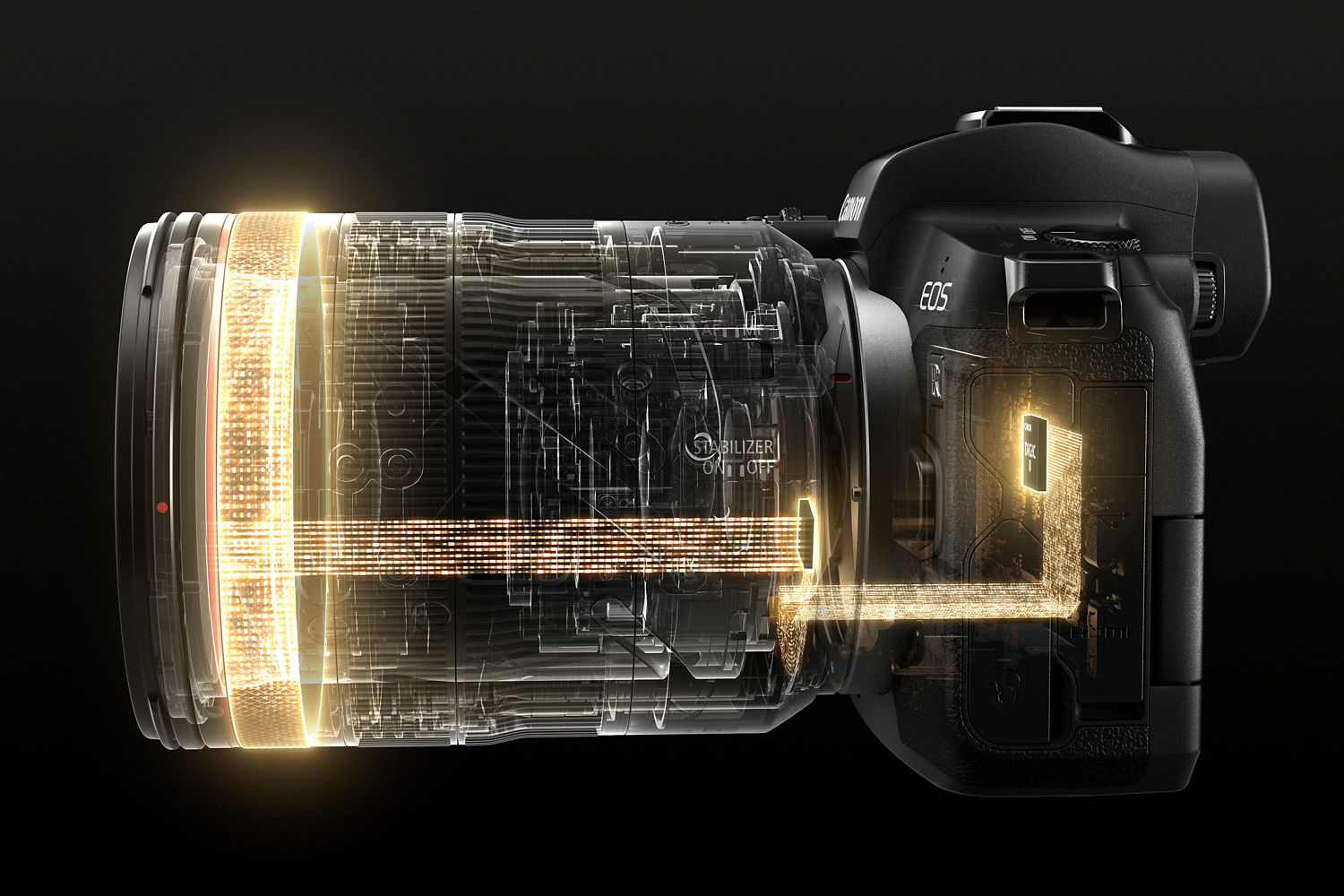
RF lenses are equipped with a Customizable Control Ring, allowing you to assign and control a function such as aperture, shutter speed, white balance selection, selecting color temperature, AF area, or ISO adjustments, to name a few. This feature provides a more customized and intuitive shooting experience, enabling you to make quick adjustments when capturing images.
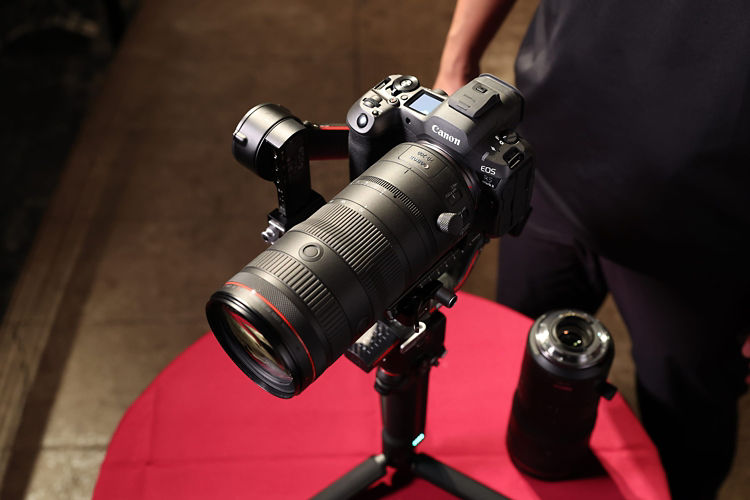
In addition to the Customizable Control Ring, many RF lenses (including the six VCM lenses and the RF24-105mm F2.8 L IS USM Z & RF70-200mm F2.8 L IS USM Z mentioned earlier in the article), include a Lens Function Button which can be programmed to perform many functions such as AF point selection, Start/ stop whole are AF tracking, Eye detection, Peaking, Focus Guide, False Color and Zebras (to name a few).
The various functions available for both the Customizable Control Ring and Lens Function Button will depend on the Canon camera being used and whether or not the camera is set to stills or video mode (with EOS R bodies).
Outstanding Optics and Image Quality
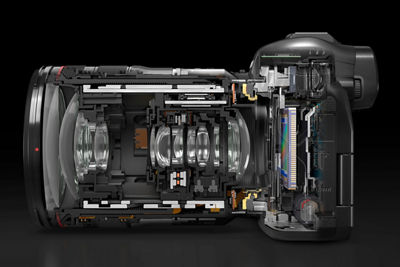
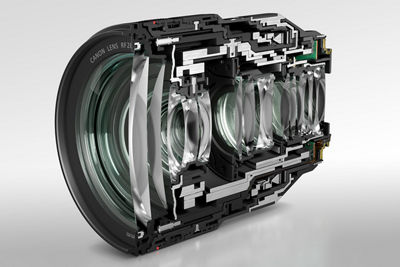
One of the main reasons to choose Canon RF-Mount lenses is their amazing optical performance. Canon has incorporated groundbreaking optical designs into RF lenses including advanced coatings and aspherical lens elements that significantly reduce chromatic aberrations and lens flare. This results in images that are sharp, vibrant, and free from common distortions.
Canon’s Autofocus Technology
RF lenses are also designed with advanced autofocus (AF) systems that are fast, accurate, and nearly silent. The RF mount supports high-speed data communication system between the camera and lens, enabling fast, more precise autofocus. This is particularly beneficial for video production, where capturing moving subjects smoothly and accurately is key.
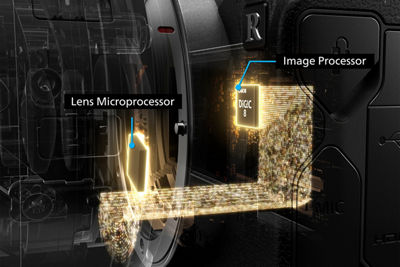
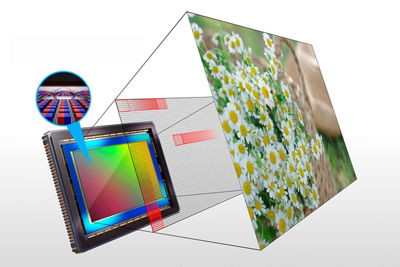
In addition, when noise is a consideration, the quiet operation of the RF lenses’ autofocus motors ensures that audio quality remains uncompromised. Combined with Canon’s Dual Pixel CMOS AF technology, RF-Mount lenses provide smooth, precise and accurate focusing, which is critical in video production.
Compact and Lightweight Design
On today’s productions, portability is key. Canon RF lenses are designed to be more compact and lighter than many of their previous DSLR counterparts. This makes them ideal for small crews. For filmmakers who frequently travel or shoot in on location or in remote places, the compact design of RF lenses allows for more dynamic and flexible shooting.
Enhanced Video Capabilities
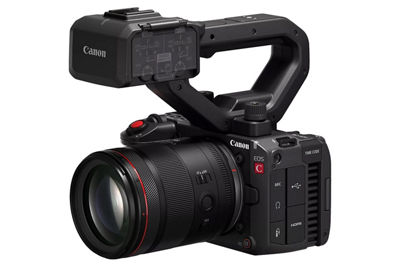
Many RF lenses also include built-in optical image stabilization, which can be essential for handheld shooting, reducing camera shake, and ensuring smooth captured footage. This feature is especially beneficial for corporate and documentary work in fast-paced environments where setting up a tripod isn’t always possible.
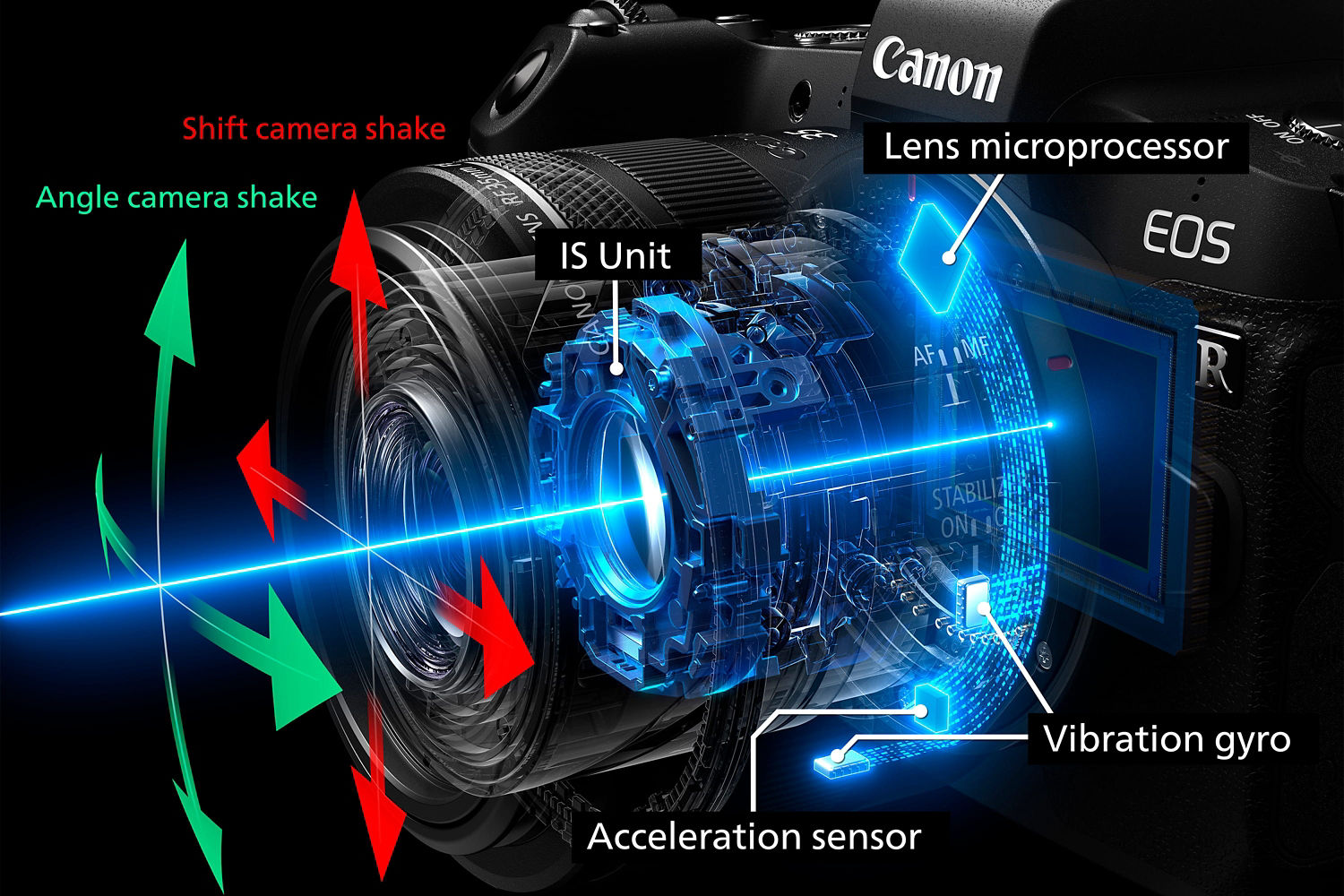
Additionally, RF lenses’ compatibility with Canon’s advanced video features available in many of their cameras such as 4K & 8K capture and Log & Raw recording (camera dependent), ensures that your captured footage is at its best.
Robust Build and Weather-Sealing
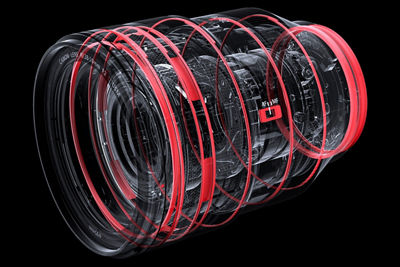
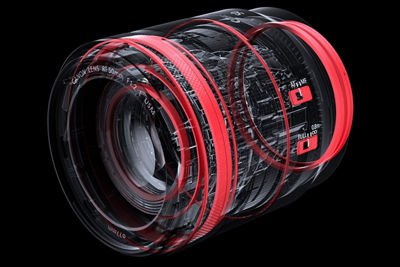
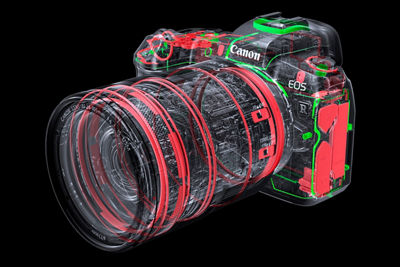
Video production takes place in various environments where weather conditions can be unpredictable. Many RF lenses are constructed to be robust and durable, with weather-sealing that helps protect against dust and moisture. RF lenses, particularly those with the L-series designation, are designed to withstand the rigors of production. This is crucial when shooting outdoors or in demanding environments.
Future-Proofing Your Investment
As technology advances, ensuring that your equipment remains relevant can be a challenge. Canon’s commitment to innovation and continuous development of their RF-Mount series means that investing in RF lenses is a future-proof decision. This ensures that your lenses will remain compatible with upcoming camera models and their various features.
Conclusion
Canon’s RF lenses are a great choice for video production applications. With their outstanding image quality, innovative design and functionality they can be used by content creators, video production professionals, independent filmmakers and companies producing content in the corporate, live event and commercial spaces. Whether you are a seasoned professional or an aspiring content creator, Canon’s RF lenses are worth considering for your next projects.
All Canon contributors are compensated and actual users of Canon products promoted.


Thanks for signing up!
The application has encountered an unknown error. Please try again in a few minutes!
By clicking Sign Up, you are opting to receive promotional, educational, e-commerce and product registration emails from Canon USA. You can update your preferences or unsubscribe at anytime.