
Every wildlife and sports photographer knows the physical and financial tax of capturing fast action in the field. For decades, reaching a skittish bird across a marsh or framing a sprinter from the far side of a stadium required a massive investment in heavy, specialized full-frame telephoto lenses and bulky camera bodies. However, a quiet revolution in sensor design and mirrorless processing has introduced a secret weapon for action creators. The Canon EOS R7 delivers professional tracking speed, extraordinary resolution, and extended optical reach in a compact body. By combining an APS-C sensor with advanced mirrorless capabilities, this camera provides a compelling alternative to far more expensive setups.
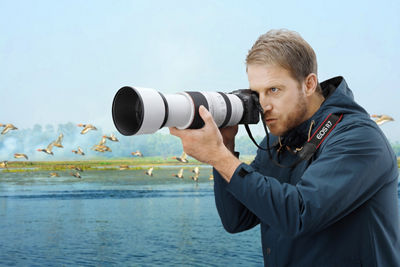
At the heart of the EOS R7 is a 32.5 MP APS-C CMOS sensor that redefines telephoto value. Because the APS-C sensor is smaller than a full-frame sensor, it provides a natural 1.6x effective multiplier to lens focal length. In practice, mounting a modest 300mm lens onto the EOS R7 camera yields the equivalent field of view of a 420mm optic without losing one stop of aperture or adding a single ounce of physical weight. For bird and wildlife photographers trying to fill the frame with distant subjects, this 1.6x crop factor acts as a built-in extender. Moreover, the camera accepts dedicated RF-S lenses while maintaining native compatibility with full-frame RF lenses and legacy EF or EF-S glass through mount adapters. Photographers can leverage super-telephoto reach without buying exotic 600mm glass.
Action photography demands relentless speed, and the EOS R7 excels with frame rates that rival top professional tools. Using its mechanical shutter or 1st curtain electronic shutter, the camera drives continuous shooting at 15 frames per second with full autofocus tracking. When maximum speed or silent operation is required, switching to the electronic shutter unleashes up to 30 frames per second. To ensure no split-second action is lost, RAW Burst Mode offers 0.5 second pre-shooting to capture moments before the shutter button is fully pressed. This speed is matched by an autofocus system derived from the EOS R3. Utilizing Dual Pixel CMOS AF technology across 651 zones, the camera automatically detects and tracks the eyes, heads, and bodies of animals, people, and vehicles across 100% of the frame.
Maintaining sharpness during fast-paced handheld shooting is achieved by the camera's 5-axis In-Body Image Stabilization. Providing up to 7 stops of shake correction when paired with lenses featuring coordinated control IS, the IBIS system transforms low-light and long-telephoto photography. Photographers can leave heavy tripods behind when tracking animals through dense forests or following erratic flight paths. The IBIS system even incorporates auto-leveling technology to keep horizons straight during rapid panning. Handheld video and still shooting become effortless, opening creative freedom without sacrificing image quality.
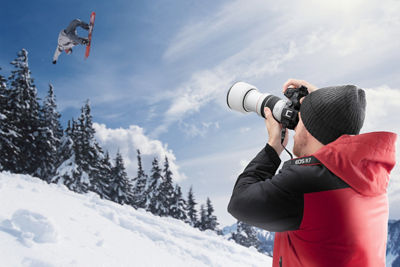
Beyond pure speed and optics, the EOS R7 camera includes practical features tailored for demanding field work. The body accommodates 2 UHS-2 SD memory card slots, allowing photographers to record RAW and JPEG files to separate cards or maintain real-time duplicate backups. Power is supplied by the long-lasting LP-E6NH battery pack. Combined with a weather-resistant construction and an integrated 8-way multi-controller dial, the camera offers durability and ergonomic control in a portable package. For action photographers seeking pro-level performance without the weight or cost of full-frame telephoto setups, the EOS R7 camera is a game-changing tool.

Thanks for signing up!
The application has encountered an unknown error. Please try again in a few minutes!
By clicking Sign Up, you are opting to receive promotional, educational, e-commerce and product registration emails from Canon USA. You can update your preferences or unsubscribe at anytime.