


Connecting Care Through Better Workflows
From registration and admissions through diagnosis, treatment, discharge, and follow-ups, clinical and administrative processes connect the people, information, and systems that support patient care. Much of this work happens behind the scenes, but it plays a critical role in ensuring that clinicians have the information they need, when they need it.
When information is difficult to access, processes fall apart. Approvals take longer than they should. Staff members are forced to repeatedly print, scan, securely transmit, and re-enter the same information. Administrative work can interfere with patient care. Across an entire healthcare organization, these inefficiencies can slow decision-making, cause administrative burdens, and make it difficult for teams to care for patients.
Healthcare organizations have invested significantly in digital technologies over the past decade, but improving care involves more than implementing new systems. It means understanding how work moves across the organization, reducing unnecessary complexity, and creating processes that better support clinicians, administrators, and the overall patient experience.
The Foundation of Connected Care
The patient experience is shaped by more than clinical expertise alone. Every stage of the care journey, from scheduling appointments and completing registration forms to documenting treatment, coordinating referrals, processing insurance information, and planning discharge, depends on information moving accurately and efficiently between people and departments.

Many of these processes go far beyond a single clinical team. A patient's information may pass through registration, nurses, physicians, imaging, laboratory services, pharmacy, health information management, and billing, often multiple times during a single episode of care. When those handoffs work well, staff members can focus on delivering timely, coordinated care. When they don't, delays, duplicate work, and unnecessary administrative effort can affect staff productivity and the patient experience.
Improving these processes starts with understanding how work moves through the organization. Identifying bottlenecks, eliminating redundant steps, and simplifying routine administrative activities gives healthcare organizations a stronger base to support caregivers and patients alike.
Healthcare firms are making measurable progress in this area. Keypoint Intelligence®’s research shows that the surveyed organizations are at different stages of clinical and administrative workflow automation maturity, with many having moved beyond planning and into implementation. In addition to automating more processes, the goal is to ensure that those efforts strengthen care coordination, improve operational efficiency, and support clinicians and patients.Footnote1
Figure 1: Maturity of Clinical and Administrative Workflow Automation
How would you describe your organization's current stage of document process automation?
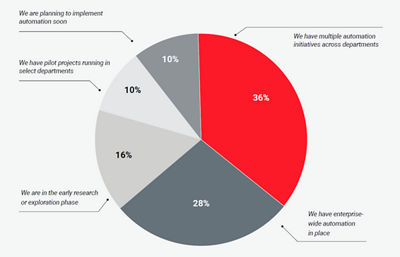
N = 50 Healthcare Respondents in the United States.
Source: Digital Transformation IT Decision-Maker Survey; Keypoint Intelligence 2025
Workflow modernization doesn't happen overnight. Organizations that begin with high-impact clinical and administrative processes can demonstrate measurable improvements while working toward a larger transformation. A thoughtful, phased approach helps ensure that technology investments translate into meaningful operational and clinical outcomes.
Care Doesn't Happen in One Department
Healthcare’s biggest operational challenges don't occur within individual departments; they occur as work moves between them. Clinical and administrative teams rely on each other throughout the care journey, so effective communication and efficient handoffs are essential to delivering timely, coordinated care. Registration teams, clinicians, laboratory and imaging staff, pharmacists, health information management (HIM), and administrative personnel all contribute information that supports patient care. As records move between people, departments, and systems, even small disruptions can create unnecessary work, duplicate tasks, or delays that affect staff and patients.
For many healthcare businesses, opportunities for improvement can come from examining how work flows from one team to the next, not by optimizing individual departments in isolation. A useful starting point is mapping a single patient journey end to end, from registration through discharge, to see exactly where information slows down or must be re-entered. That map usually highlights two or three handoffs that are worth fixing first, rather than attempting a full department-by-department overhaul. When information moves more efficiently across those handoffs, teams can spend less time managing administrative tasks and more time on patient care.
Giving Time Back to Care Teams
Clinical expertise is a vital component of quality healthcare, yet clinicians and support staff often spend a significant portion of their days managing the administrative tasks that surround patient care. Reviewing documentation, locating records, completing forms, obtaining approvals, and coordinating information across departments are all essential activities, but they can also interfere with time that is better spent caring for patients.
Improving clinical and administrative workflows doesn't remove these responsibilities, but it does make them easier to complete. A practical way to start is by identifying a few administrative tasks that staff members repeat most often in a typical week, then targeting those tasks first for standardized templates, digital forms, or automated routing. When information is easier to access, documentation follows standardized processes. Routine tasks require fewer manual steps as a result, and healthcare professionals can spend more time delivering care.
Even small improvements can have a meaningful impact. Eliminating duplicate data entry, reducing unnecessary document handling, or streamlining approvals might seem to save only a few minutes. Across hundreds of employees and thousands of patient interactions, however, those efficiencies are designed to streamline operations and support staff, patients, and the organization as a whole.
Better Processes, Better Care
Healthcare firms manage hundreds of clinical and administrative processes every day, so attempting to improve all of them at once is rarely practical. Instead, many organizations find success by identifying the processes that have the greatest impact on patient care, staff productivity, and operational performance. Patient registration, referrals, prior authorizations, discharge planning, and care coordination are often good starting points, since improvements there tend to benefit multiple departments at once.
As organizations identify opportunities for improvement, consistency is just as important as efficiency. Processes that are performed differently across departments, facilities, or care settings can create unnecessary variation, interfere with training processes, and introduce delays. Standardizing routine activities such as document routing, approvals, records management, and communication helps staff collaborate more effectively and creates a more predictable experience for patients.
Keypoint Intelligence’s research highlights a related reality. Healthcare organizations surveyed report that identifying the right processes to automate, integrating with existing systems, and addressing security and compliance requirements are the most significant challenges when implementing document automation initiatives. Staff training and demonstrating return on investment also shape successful adoption.Footnote1
Figure 2: Challenges to Implementing Document Automation
What do you view as your biggest challenges to implementing document automation?
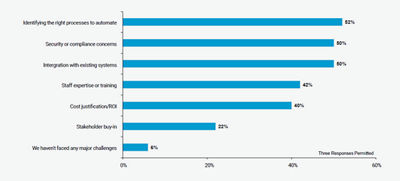
N = 50 Healthcare Respondents in the United States.
Source: Digital Transformation IT Decision-Maker Survey; Keypoint Intelligence 2025

Security, Compliance, and Remote Care Reality
Security and compliance remain top of mind for healthcare IT leaders, and for good reason. Every document that moves through registration, clinical documentation, billing, and health information management carries protected patient data, and every handoff is a potential point of exposure. According to Keypoint Intelligence®’s IT Decision-Maker research, improving print security and compliance (including HIPAA-related safeguards) ranks among the top document-related priorities for today’s healthcare organizations.
This priority sits alongside a shift in how and where care is delivered. The same research found that supporting remote care with digital document workflows is now one of the most pressing priorities for healthcare IT leaders. The reality is that more visits, consultations, and follow-ups happen outside a traditional facility. The documents supporting that care, as well as any intake forms, consent records, prescriptions, and referrals (the compliant handling of which remains the sole regulatory responsibility of the clinical provider), need to move securely regardless of where a patient or provider is located.
Meeting both of these priorities starts with visibility. Organizations that know where sensitive documents live, who can access them, and how they move between departments and locations are better equipped to close gaps before they become incidents. Practical steps include auditing print and scan access points across facilities, applying secure release and authentication consistently across all points of care, and extending encryption and access controls to cover remote and telehealth workflows—not just on-site systems. By addressing security and remote care together rather than treating them as separate initiatives, healthcare firms can protect patient information while keeping pace with modern care delivery.
Better Workflows, Better Outcomes
Clinical and administrative workflows will continue to change as healthcare providers respond to new technologies, workforce demands, and evolving patient expectations. Organizations that regularly evaluate how information moves across clinical and administrative functions are better positioned to reduce unnecessary complexity, strengthen collaboration, and support efficient day-to-day operations.
The value of these efforts goes beyond operational efficiency. Well-designed workflows help clinicians and staff spend less time managing information, improve coordination across departments, and create a more seamless experience for everyone involved in delivering and receiving care. As patient expectations continue to evolve, the ability to adapt and refine these processes will become an even more integral part of delivering high-quality healthcare.
Footnote
- Source: Keypoint Intelligence, 2026 Digital Transformation Survey, U.S. Healthcare respondents (n=50).

CONTACT A CANON SALES REPRESENTATIVE